
A family in Ingleburn rang me at nine on a Sunday night. Faint rotten egg smell in the laundry, stronger when the hot water fired up, and a two year old asleep in the next room. They had already done the right things: gas off at the meter, windows open, everyone out the back. A gas leak is not a plumbing problem first. It is a get-everyone-safe problem first, and the plumbing comes after. If you can smell gas now, we are a licensed gas fitter, no call-out fee, 24/7.
If you smell gas: put out flames, do not touch any switches, open doors and windows on the way out, turn the gas off at the meter or bottle, get everyone outside, and ring Jemena on 131 909 from outside. Once the gas is safely off, a licensed gasfitter pressure tests the pipework, finds the leak, repairs it and issues a certificate of compliance. Gas work is never a do-it-yourself job in NSW.
Smell gas? Do this first
- Put out any naked flames: candles, the cooktop, the barbecue, a cigarette.
- Do not touch light switches, power points, the range hood or anything that can spark. Leave them as they are, even to switch off.
- Open doors and windows on your way out, if it is safe to do so.
- Turn the gas off at the meter (natural gas) or at the bottle (LPG). The meter valve is a lever on the pipe beside the meter: turn it a quarter turn so the lever sits across the pipe. Bottle valves close clockwise.
- Get everyone, including pets, outside and away from the building.
- From outside, ring Jemena's gas leak line on 131 909 (24 hours) for natural gas, or your bottle supplier for LPG. If anyone is unwell or you think there is immediate danger, ring 000. Do not use your phone until you are clear of the smell.
Jemena's own advice is the same three steps: recognise the rotten egg smell, leave, report it. That smell is added to natural gas on purpose so you notice a leak long before the gas reaches a dangerous concentration. A faint smell is a warning, not a panic. A strong smell in a closed room is a get-out-now.
Who to call for a gas leak: Jemena or a gas plumber?
Both, in that order, if the smell is strong or you cannot isolate it. Jemena runs Sydney's natural gas network: the street main, the service to your house and the meter. Their crew makes it safe, and fixes anything on their side of the meter. If the leak is on your side, they will usually shut the supply off at the meter and tell you to get a licensed gasfitter, because everything past the meter belongs to the property owner and in NSW only a licensed gasfitter may work on it.
If the smell was faint, you have turned the gas off at the meter and it has cleared, you can go straight to the gas plumber. That is a same-day job, and I will say so on the phone rather than turn out at midnight for a job that can wait until morning with the gas safely off. For LPG, the bottle supplier is your first call for a bottle or regulator problem, and a gasfitter for everything downstream.
What a gas smell in the house usually means
| Where and when you smell it | Most likely cause | How urgent |
|---|---|---|
| Near the cooktop when it is off | A knob nudged open, or a worn burner valve or flexi connection behind the unit | Knobs fully off; if the smell stays, isolate at the meter and book a gasfitter |
| Near the hot water unit when it fires | Pilot blowing out, a leaking union, or a regulator on its way out | Isolate the unit, same-day gasfitter |
| Outside near the meter | Meter, regulator or service pipe | Jemena on 131 909; it is their side |
| In a room with no gas appliance | A leaking pipe in the wall, floor or under the slab | Gas off at the meter, out of the house, Jemena, then a gasfitter |
| Only when the heater or oven runs, plus headaches | Poor combustion or a blocked flue producing carbon monoxide | Stop using the appliance, ventilate, gasfitter before you use it again |
| Faint, constant, everywhere, higher bills | A small leak at a joint somewhere in the run | Pressure test by a gasfitter this week |
Signs of a gas leak that are not the smell
A hissing sound at a fitting or a bottle. A line of dead grass or dying shrubs across the yard, which is the classic sign of a leaking buried line between the meter and the house. A pilot light that keeps going out (I cover the hot water version in no hot water: what to check). A gas bill that has climbed for no reason. And the people signs: headaches, dizziness, nausea or tiredness that lift when you leave the house. Those last ones can be carbon monoxide from a badly burning appliance, which has no smell at all and is the more dangerous of the two. Either way the answer is the same: appliance off, air in, people out, gasfitter.
How gas leak detection works
The real tool is not a sniffer wand, it is a pressure test. I isolate the pipework at the meter, connect a gauge (a manometer), pressurise the consumer piping and watch it. If the pressure holds, the pipes are tight and the problem is an appliance. If it drops, I start sectioning: isolate the cooktop, test again; isolate the hot water unit, test again, until the drop disappears. Soapy water on every joint, union and bayonet in the suspect section finds the exact spot, because a leak blows bubbles. An electronic detector helps in cupboards and wall cavities.
The hard ones are buried and under-slab lines. On a house in Prestons last year the line from the meter ran under the driveway and had corroded through under a garden bed. Tracing the route and deciding whether to dig or reroute is where experience earns its keep. Often it is quicker and cleaner to abandon the old line and bore a new path with the Grundomat than to cut up concrete chasing a pinhole.
Gas leak repair and the certificate of compliance
Common repairs are less dramatic than people fear: a new flexi connection and bayonet at the cooktop, a leaking union at the hot water unit, a regulator, a corroded length of copper, or an old galvanised line replaced. After any repair the system is pressure tested again, the appliances relit and checked, and you get a certificate. In NSW a licensed gasfitter must give you a certificate of compliance for network gas (or a certificate of inspection for bottled gas) after gas work, and Jemena will not reconnect a locked meter until it also has a leak test certificate from the gasfitter. The NSW Government's guide to using a gasfitter covers this and how to check a licence.
That is the do-it-yourself line too. Turning the gas off, opening a window and calling for help is your job. Tightening a fitting, swapping a flexi hose, replacing a cooktop or moving a bayonet is licensed gasfitting work, whatever the hardware shop says. A leak you have "fixed" with thread tape is a leak that is still there.
What gas leak detection and repair costs
Gas work is quoted on inspection, because no two leaks are the same. What moves the price is access (a fitting behind a freestanding cooktop is quick, a line under a slab is not), parts (a flexi connection versus metres of new pipe), and how much has to be re-tested and certified. If the leak turns up in an old gas storage unit that is due for replacement anyway, I will say so, and what a new hot water system costs is covered separately. You get the price before I touch anything, and if the gas can safely stay off overnight so I come in the morning at the normal rate, I will tell you.
When to call a gas plumber
Ring Jemena first, on 131 909, whenever the smell is strong, it is coming from the meter, or you cannot make it stop by turning appliances off. Ring a gas plumber (a gas fitter, same trade, same licence) when you have isolated the gas and need the leak found and fixed, when Jemena has locked your meter and you need a certificate to get it back on, when a pilot keeps going out or a flame is burning yellow and sooty, when you are moving or replacing a cooktop, heater or gas hot water system, or when you have bought an older house in Cabramatta or Campbelltown and want the gas pressure tested before you rely on it. Gas emergencies are what my 24/7 emergency plumber line is for; the rest can wait for business hours.
Gasfitting in NSW is licensed work. I hold a plumbing, drainage and gasfitting licence (NSW Lic 488158C), I test before and after, and you get the certificate. Done right. Done once.
Monarch Civil & Plumbing covers South West Sydney and the Macarthur region from our base in Austral. For gas leak detection, gas leak repair or any of my other plumbing services, from a gas fitter in Ingleburn to Campbelltown, Liverpool and everywhere between, ring 0455 222 292.
Related guides: gas vs electric hot water.
Need it sorted? Ring 0455 222 292 any hour or book online. Monarch Civil & Plumbing is a licensed gas fitter, no call-out fee (NSW 488158C) for natural gas and LPG, with a compliance certificate on every job.
Emergency in Liverpool or Campbelltown right now?
Ring 0455 222 292 and Paul answers. emergency plumber Liverpool and emergency plumber Campbelltown say what to shut off while he is on the way; everywhere else within about 20 km of Austral the 24/7 emergency plumber page covers it. Same rate day or night, no call-out fee.
Frequently asked
What should I do if I smell gas in my house?
Put out flames, leave every switch exactly as it is, open doors and windows on your way out, turn the gas off at the meter or bottle, and get everyone outside. From outside, ring Jemena on 131 909 for natural gas or your bottle supplier for LPG, or 000 if anyone is unwell or in danger. Do not use your phone near the smell. Once the gas is off and the house has aired, a licensed gasfitter finds and fixes the leak.
Do I call Jemena or a gas leak plumber first?
Jemena first if the smell is strong, it is coming from the meter, or you cannot stop it by turning appliances off. Their crew makes it safe and fixes anything on their side of the meter. If the leak is on your side they will usually shut the meter off and tell you to get a licensed gasfitter. If the smell was faint and has cleared with the gas off, go straight to the gasfitter.
Is a faint gas smell an emergency?
Treat it seriously but calmly. The odorant is added so you notice a leak well before it reaches a dangerous concentration. Turn the gas off at the meter, open the windows and see whether it clears. If it does, the house is safe and the repair can wait for business hours. If the smell is strong, gets stronger, or you cannot isolate it, get out and ring Jemena on 131 909 straight away.
Can I fix a gas leak myself?
No. In NSW any repair or renovation involving gas, including moving or replacing an appliance, must be done by a licensed gasfitter, who then gives you a certificate of compliance. What you can do is turn the gas off, ventilate and call for help. Tightening a fitting or wrapping a joint in thread tape does not make a leak go away, and Jemena will not reconnect a locked meter without a leak test certificate from a licensed gasfitter.
How do I find a licensed gas fitter near me?
Ask for the licence number and check it on the NSW Government's online licence check or by calling Building Commission NSW on 13 27 00. A gas fitter and a gas plumber are the same trade; the licence should say gasfitting alongside plumbing and drainage. Never accept work without a certificate of compliance at the end. Mine is NSW Lic 488158C, and I cover South West Sydney and the Macarthur region.
What does a gas leak smell like, and what if I feel sick but cannot smell anything?
Natural gas is odourless, so a rotten egg or cabbage smell is added on purpose. If you feel headachy, dizzy or nauseous with no smell, and it lifts when you leave the house, suspect carbon monoxide from a badly burning heater, oven or hot water unit. Carbon monoxide has no smell at all. Stop using the appliance, ventilate, get out into fresh air, and have the appliance checked before it is used again.
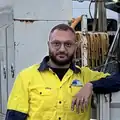
Licensed plumber and drainer based in Austral, 13+ years in the trade, working across Liverpool, Fairfield and the Macarthur region. About Paul