
Every plumber who clears drains has an opinion about this, and most of them own one tool, so the opinion follows the tool. I carry both. The electric eel came first and still has its jobs; the jet blaster does most of the sewer and stormwater work now, and the drain camera decides between them. Here is what each one actually does inside the pipe, where each one is the right call, and the two situations where neither is, from jobs across Liverpool, Wattle Grove, Moorebank and the Macarthur estates. If the drain is overflowing now, the blocked drains page covers the call-out, with no call-out fee.
An electric eel is a rotating steel cable with a cutting head that bores a hole through the blockage; it is quick, cheap and suits toilets, short runs and tight bends. A jet blaster is a high-pressure water hose with a nozzle that cuts roots and scours grease, scale and silt off the whole pipe wall and flushes it away; it suits sewers, kitchen lines and stormwater and lasts longer. Roots, grease and recurring blockages want the jetter; a cracked or collapsed pipe wants neither, it wants a camera and a repair.
What an electric eel does inside the pipe
An electric eel, a drain snake or drain machine, is a long steel cable driven by a motor, with a cutting or boring head on the end. It is fed into the drain and spun, and the head chews a passage through whatever is in the way. It is good at what it was built for: a toilet blocked close to the pan, a basin or shower trap, a short run of 40 or 50 mm pipe, and bends that a jetter hose will not take. It is cheap to run and fits in a car boot, which is why it is the first tool most plumbers buy. Its weakness is that it opens a hole rather than cleaning the pipe. Grease gets pushed aside and smeared along the wall, roots are cut off at the stub and grow back, and scale stays where it is, so the drain works for a few months and blocks again in the same place.
What a jet blaster does inside the pipe
A jet blaster, a hydro jet or water jetter, is a petrol or diesel pump that pushes water down a hose at high pressure to a nozzle with jets facing backwards and forwards. The backward jets pull the hose up the line under its own power; the forward jet cuts into the blockage. Different nozzles do different jobs: a root cutter for sewers under trees, a flusher for grease and silt, a chain or spinning head for scale. The water scours the whole circumference of the pipe back to bare wall and carries everything downstream to the main, so the line is clean, not just open. A van-mounted unit will reach 60 metres or more through an inspection opening, which covers any house line in South West Sydney. The jet blasting page covers how a job runs.
Which blockages suit which tool
Grease and soap in a kitchen or laundry line: jetter, every time, because an eel smears grease and the line blocks again within months. Tree roots in a sewer: jetter with a root cutter, then a camera to find the joint they came through, because roots cut with an eel are back within the year. Scale and silt in an old earthenware line, or a stormwater line full of mud and leaves: jetter, because an eel cannot move silt at all. A toilet blocked near the pan by paper or a toy: plunger first, then an eel, and the jetter stays in the van. A short trap under a basin: an eel or a hand snake. A blockage a long way down a 100 mm sewer, ten metres or more from any opening: jetter, because an eel cable that long whips, binds and can snap. The blocked drain causes guide covers how to tell which drain and what is likely in it.
What can go wrong with each
An eel in an old clay or earthenware sewer can catch on a displaced joint and crack it, and a cable that binds and snaps leaves steel in your drain that then has to be dug out. An eel driven hard into a collapsed section makes the collapse worse. A jetter in a pipe that is already broken can push water and debris out through the break into the ground, which is why I put the camera down first on any line that has blocked more than once, and why a jetter is run with the pressure matched to the pipe rather than flat out. Neither tool fixes a cracked, bellied or back-falling pipe. On a Wattle Grove job in October the jetter cleared a plug of paper and fat at 11.3 metres, and the camera showed water sitting in the pipe at 9 metres, a section laid without enough fall. The jetter bought time; the fix is re-laying that section.
Why the camera decides
A drain that has blocked once is probably a one-off. A drain that has blocked twice has a cause, and the cause is in the pipe. A CCTV drain inspection after the clear shows whether it was grease, roots, a crack, a belly or debris, and the locator marks the spot from the surface with its depth. That footage is what decides between jetting once a year and living with it, patching one joint, or digging out a short section with the excavator. It also stops anyone, me included, selling you a repair the pipe does not need.
What each one costs
A jetter visit usually costs more than an eel visit, because the machine, the van and the fuel cost more and the job includes flushing the whole line, and it is nearly always cheaper than two eel visits for the same blockage. Most Sydney plumbers quote jetting by the hour or by the job with a call-out fee on top; we quote the job after looking at it and there is no call-out fee. The jet blasting guide has the typical Sydney ranges and what pushes a job up or down.
Frequently asked
Is a jet blaster better than an electric eel?
For sewers, kitchen lines, stormwater, roots, grease and anything that has blocked before, yes: it cleans the whole pipe wall rather than boring a hole, and the clear lasts. For a toilet blocked near the pan, a basin trap or a tight 40 mm bend, the eel is the right tool and the cheaper one.
Can jet blasting damage pipes?
Run at a pressure matched to the pipe it will not; a modern jetter is used on clay, PVC, copper and cast iron every day. The risk is a pipe that is already broken, where water and debris can be pushed out through the break, which is why a line that has blocked more than once gets the camera first.
Why does my drain block again a few months after it was cleared?
Because the clear opened a hole and left the cause: grease smeared along the wall, roots cut at the stub, or a section that holds water. A jetter clear followed by a camera shows which, and the fix is either a proper clean, a root cut and a repair at the joint, or re-laying the section.
Do you use an electric eel or a jet blaster?
Both. The eel for toilets, traps and short runs; the jetter for sewers, kitchen lines and stormwater; and the camera on anything that has blocked before or is more than a few metres from an opening.
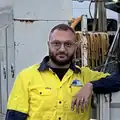
Licensed plumber and drainer based in Austral, 13+ years in the trade, working across Liverpool, Fairfield and the Macarthur region. About Paul